Safeguarding in Sport: Why It Matters and What It Means to Be a Certified Child Safeguarding Officer
6/15/20263 min read
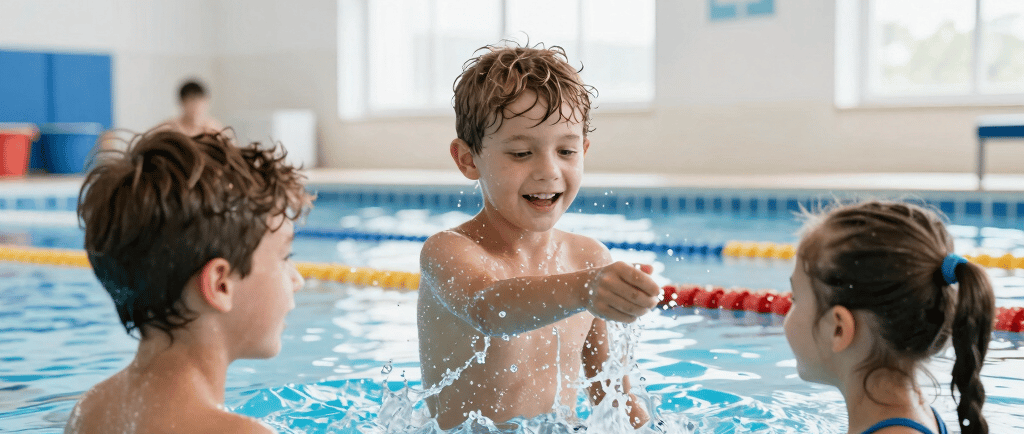
Every child who steps onto a pool deck, into a gym, or onto a sports field has one fundamental right: to be safe. Not just physically, but emotionally and psychologically too. Sport should be a place where children grow in confidence, make friends, and discover what they are capable of — never a place where they are exposed to harm. Making sure of that is what safeguarding is all about, and it sits at the very heart of the SafeSwim project.
What is safeguarding?
Safeguarding is the set of actions, policies, and everyday behaviours that protect children and young people from abuse, neglect, harassment, and harm. In sport, it means creating environments where risks are recognised early, where children know they will be listened to, and where every coach, trainer, and official understands exactly what to do if something isn't right.
It is not about suspicion or fear. It is about competence and care — knowing the signs, knowing the rules, and knowing how to act.
Why safeguarding matters — especially in sport
Sport places adults in a unique position of trust and influence. Coaches spend hours with young athletes, often in physically close, emotionally intense, and sometimes unsupervised settings. That closeness is part of what makes sport so powerful — and also why clear safeguarding standards are essential.
Children in sport can be particularly vulnerable: they may depend on a coach for selection or progression, they may be travelling away from home, and they may not have the words or the confidence to speak up when something feels wrong. When safeguarding fails, the damage can last a lifetime. When it works, it builds the trust that lets children — and sport itself — flourish.
This is no longer optional. Across Europe, national laws and sport governing bodies increasingly require organisations to have safeguarding measures and designated, trained people in place.
The role of the Child Safeguarding Officer
A Child Safeguarding Officer (CSO) is the person within a club or organisation who carries that responsibility. They are trained to:
recognise the different forms of abuse and neglect;
respond appropriately when a child discloses a concern;
follow correct recording, reporting, and confidentiality procedures;
and help create a culture where safeguarding is everyone's business.
Having trained CSOs turns good intentions into a reliable system that protects children every single day.
The certification behind SafeSwim: VitalSkills / HSQE Safeguarding Children Level 1
To make this training real and credible, SafeSwim does not rely on informal workshops alone. Every participant completes a recognised, externally certified qualification: the Safeguarding Children Level 1 course, delivered online through the VitalSkills platform by HSQE Ltd.
Why does this matter? Because the certificate is serious and verifiable:
It is CPD-certified through The CPD Certification Service — the leading independent authority on Continuing Professional Development.
HSQE's training is quality-assured by respected national bodies, including RoSPA (the Royal Society for the Prevention of Accidents), IOSH, and IEMA.
The course includes a formal online assessment, so certification is earned, not simply attended.
It provides the foundation level of a clear professional pathway that continues with advanced and Designated Safeguarding Lead qualifications.
In other words, a SafeSwim participant doesn't just walk away with a nice piece of paper — they walk away with an internationally recognised credential that proves they have met an established standard of safeguarding awareness and responsibility.
Why this project matters
SafeSwim, co-funded by the Erasmus+ Sport programme of the European Union, takes this one step further. Rather than training people in isolation, it builds a network of certified safeguarding professionals across three countries — Croatia, Slovenia, and Turkey — and works to align local practice with national and European standards, including cooperation with National Olympic Committees.
The goal is bigger than a single workshop. SafeSwim aims to create a sustainable, scalable safeguarding model that sports organisations across Europe can adopt — so that protecting children becomes a built-in part of how sport operates, not an afterthought.
Because in the end, the message is simple, and it's the one we carry on every banner, certificate, and post:
A Safe Kid is a Happy Kid.
This project is co-funded by the European Union. Views and opinions expressed are those of the author(s) only and do not necessarily reflect those of the European Union or the European Education and Culture Executive Agency (EACEA). Neither the European Union nor EACEA can be held responsible for them.